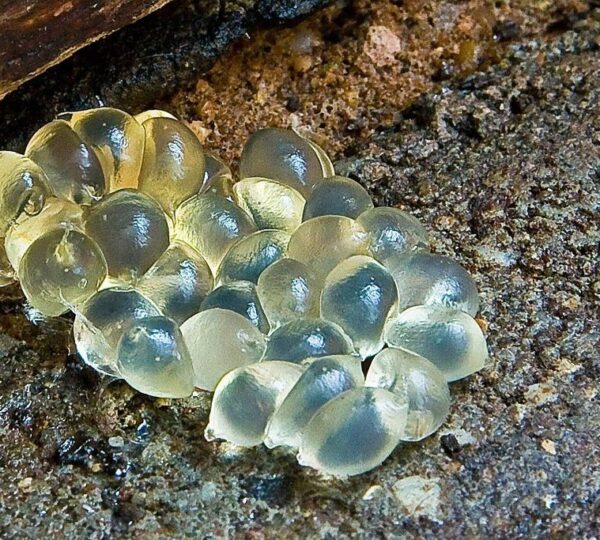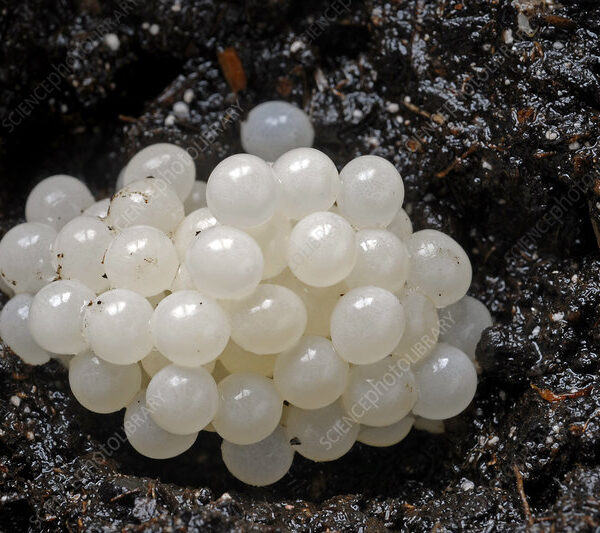
Curiosity pulled me closer.
The little spheres were packed tightly together, smooth and pearl-like, with a faint translucence that caught the light. They didn’t look like debris. They looked placed—intentional.
I slipped on my gardening gloves and gently pressed one.
It gave slightly under my finger—soft, cool, almost gelatinous.
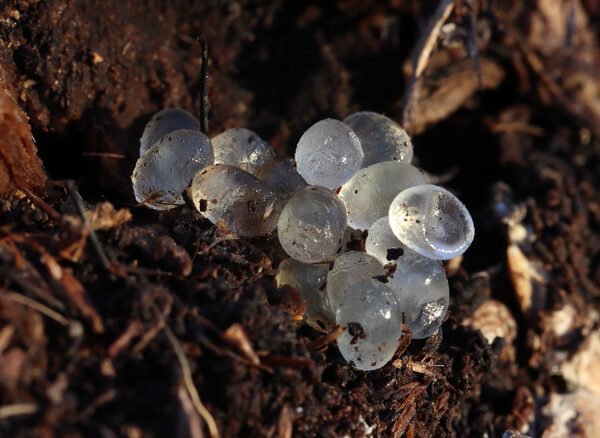
That’s when my stomach tightened. These weren’t pebbles at all. They were something living.
Carefully, I lifted a few and brought them inside for a closer look. Under brighter light, I could see faint dark specks inside some of them—tiny shapes suspended within.
They were eggs.
But eggs from what?
After checking reliable gardening sources, I found the answer: snail eggs. Snails often lay clusters of small white or translucent eggs in damp soil, especially in shaded garden beds. Under the right conditions, they hatch within a few weeks, and the baby snails begin feeding almost immediately.
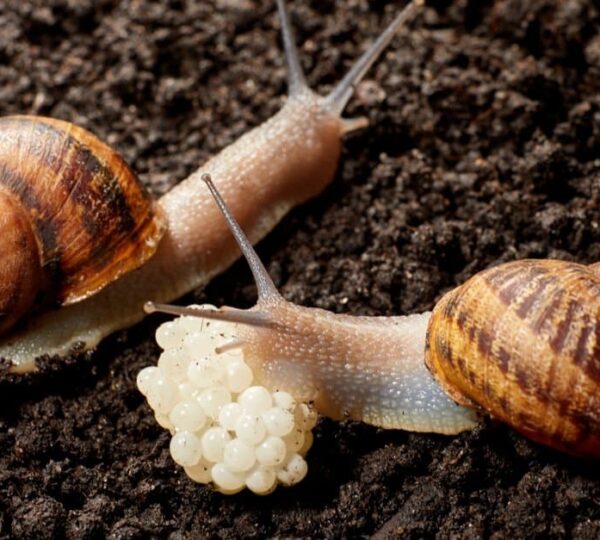
At first, I felt a strange sense of awe. Seeing life at such an early stage was fascinating.
But that wonder didn’t last long.
Because I also knew what snails can do to a garden.
While they play a role in breaking down organic matter, snails can become destructive fast. If their numbers grow, tender leaves, seedlings, and flowers can disappear overnight.
And some snail species can even carry parasites that may pose risks to pets—and in rare cases, humans. So even though the eggs looked delicate, almost beautiful, they weren’t harmless.
They were a warning.
Once I understood that, I knew I had to deal with it responsibly. I went back outside and carefully poured boiling water over the area—a method often recommended to prevent the eggs from hatching while keeping the solution simple and contained. Then I gently turned the soil, checking under mulch and stones for any other clusters nearby.